Wake up, World! It’s Ramadan! | Alson.AI
alson.ai, Alson.AI, storybook ,digital storybook
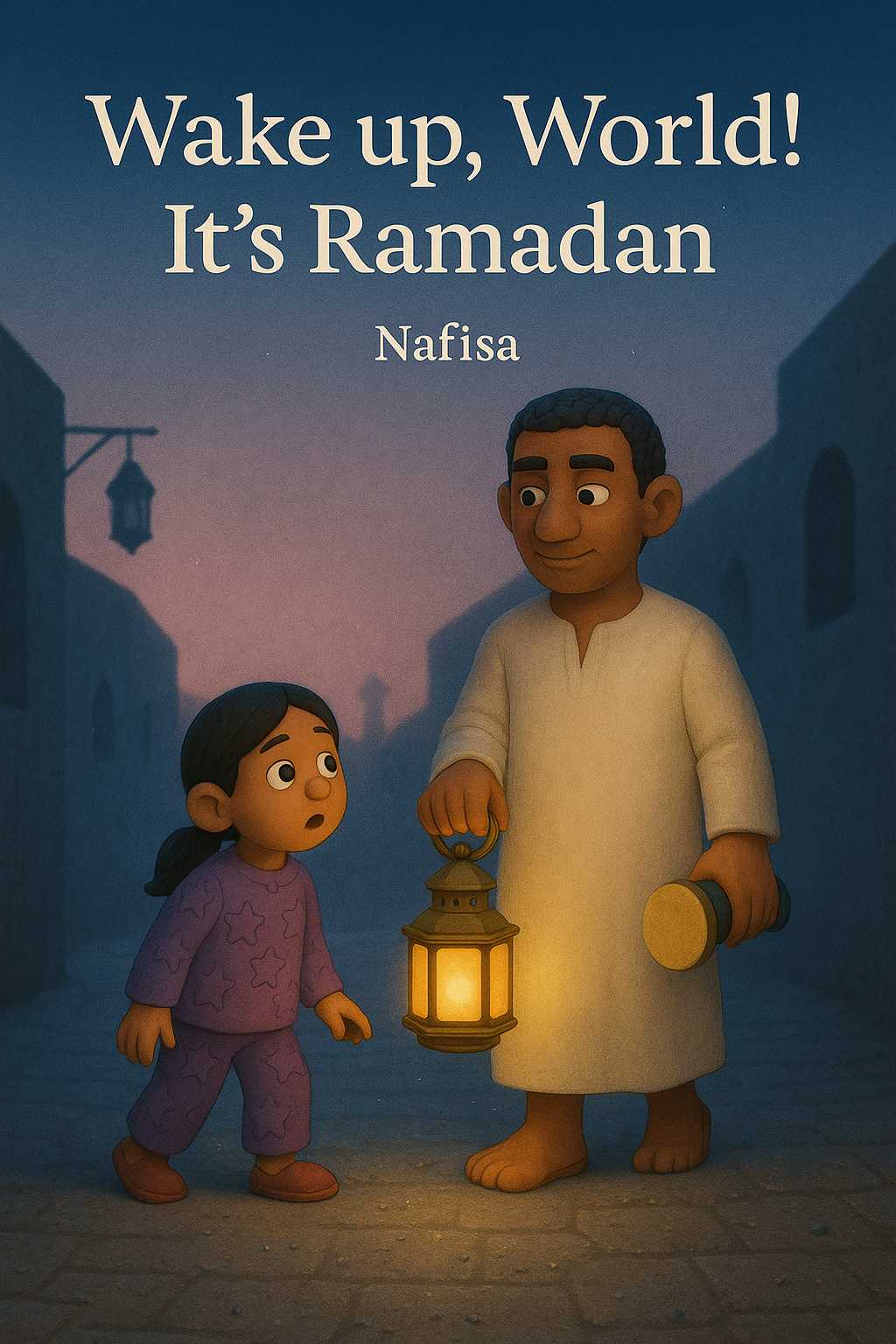
Ayesha wakes before dawn for suhoor and when her smart alarm springs to life she wonders how people woke up long ago. Her parents whisk her on a journey from the lantern lit streets of Cairo where the Mesaharaty taps a drum to the echoing Davulcu in Istanbul and the bamboo kentongan in Java. She learns of the Sherkhan in Kashmir, the Musaharati chanting through ancient alleys in Damascus, the singing groups in Senegal and elders calling out in Harar. As each image fills her imagination she discovers that these morning calls carry warmth, community and the shared magic of Ramadan traditions around the world. This gentle bedtime story celebrates curiosity, cultural heritage and the joy of connecting across time and place.
alson
The Alexa on the bedside table chimed cheerfully, waking Ayesha. She opened her eyes, stretched wide, and although she loved her cozy purple star-patterned pajamas, she knew it was time to rise.
It was early, long before the sun would paint the sky. It was time for suhoor. Ayesha padded into the kitchen to join her parents and older sister.
The house was quiet, humming with the soft light from the lamps. As she took a bite of her breakfast, Ayesha had a question. She always had questions!
"How did you wake up before Alexa existed?" she asked her parents. Her mother smiled gently. "We used a phone alarm."
Ayesha frowned slightly. "And before that?" Her father chuckled. "A radio alarm clock." "And before that?" Ayesha pressed. "A loud, manual alarm clock," her father answered.
Ayesha leaned over her bowl. "And before that?" Her parents looked at each other, a warm memory sparking in their eyes. The digital hum of the room seemed to fade away.
"Well," her father began, "before clocks and phones, there were people. They would walk in neighborhoods and wake people up for suhoor." Ayesha’s eyes went wide.
"Real people? Tell me how it happens!" The kitchen walls seemed to melt away as her parents began to weave a story of the world outside.
"In Cairo," her mother said softly, "the Mesaharaty walks under hanging lanterns." Ayesha imagined a man in a white robe, holding a glowing lantern.
"He taps a small drum and calls out people by name." Her mother’s voice dropped low, imitating the caller. "'Ya Ahmed… Ya Fatima… Wake for suhoor…'"
Ayesha could almost see the children in her mind, waiting by balconies to hear their family’s name called out in the dark. "It is different in other places," her father added.
"In Istanbul, the drummer is called a Davulcu. He beats a large davul drum." He tapped the table rhythmically. "It echoes between the tall minarets."
"And in Kashmir," her mother continued, "a man in a long cloak called a pheran walks through the cold streets. They call him Sahar Khan, and each neighborhood has its own."
The world felt so big to Ayesha. "In Syria, Jordan, and Palestine, he is called Musaharati," her father explained.
Ayesha imagined the sound bouncing off old stones. "Is it always a drum?" she asked. "Not always," her father said. In old Damascus, he would chant poetry while walking through stone alleys.
In Madinah, before dawn in Ramadan, an early adhān call rises through the quiet streets. Families wake gently for suhoor before the true adhān of Fajr comes.
In parts of Java, people use the kentongan, a hollowed bamboo slit. He tapped his knuckles, saying, "Young men walk through villages, striking it. Tok-tok-tok. It echoes through palm trees."
In Sudan, before dawn in Ramadan, a caller walks the streets, chanting, ‘Ya nā’imīn, wake for suhoor!’
“Rhythmic, melodic voices rise in open skies by the fire in some countries,” said Ayesha's mother.
"And finally," her father whispered, leaning in close, "in Harar, one of East Africa’s oldest Islamic cities, elders historically walked through the walled city calling out reminders before Fajr."
Before Ayesha could ask about another place, the Fajr adhān rose, reminding that though Muslims live in many cultures and languages, the call to prayer is one. And like billions, they too prayed.
Ramadan traditions
suhoor story
Islamic culture
world cultures
morning ritual
cultural heritage