The Wound of Time
By AlsonAI
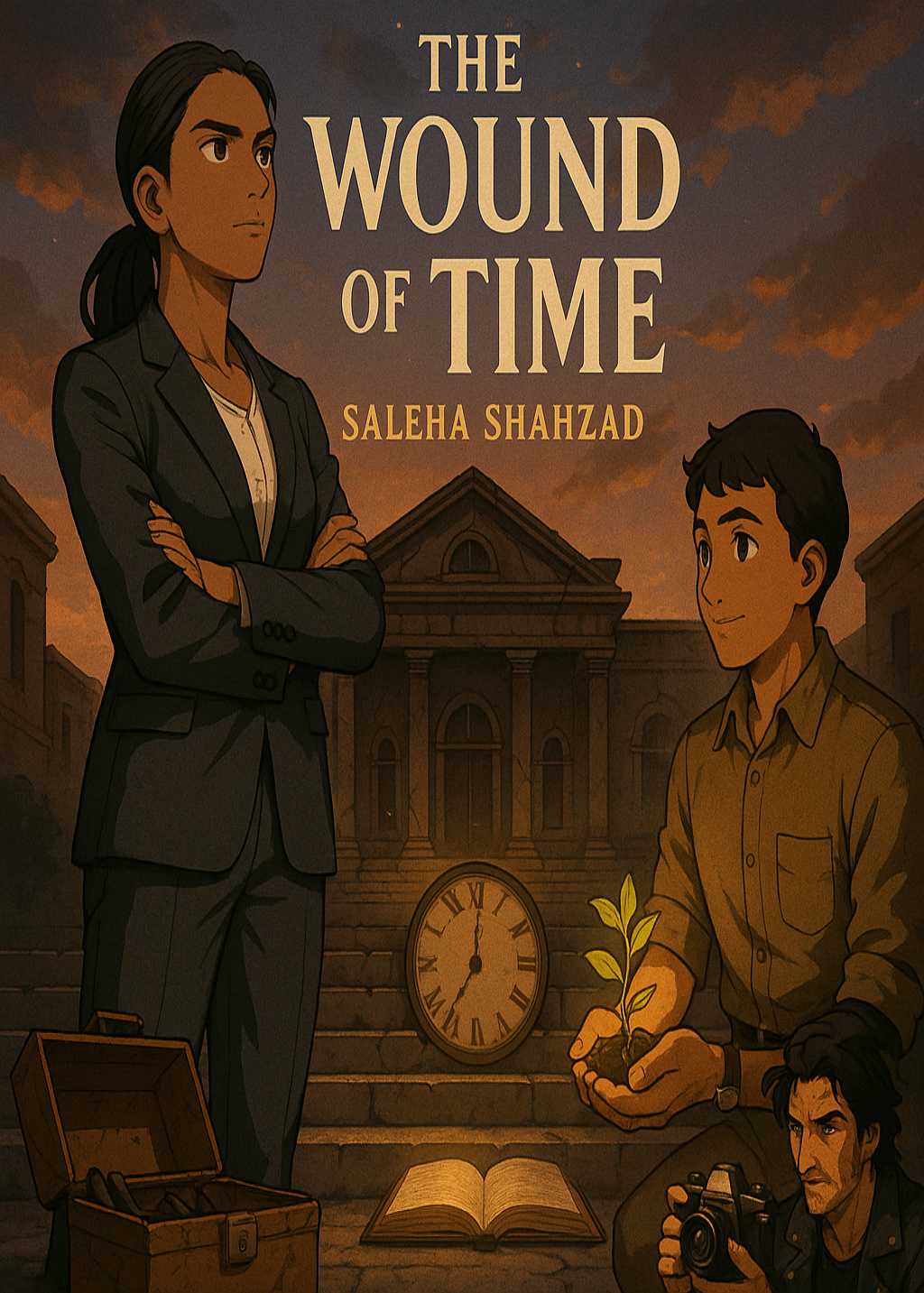
Raniya Murad rose from the grease scented garage of her childhood to become Lahore s youngest human rights lawyer by unraveling a tribal jirga s decree. When her sister was taken in an act of injustice she vowed to wield the law like a weapon. At university she found steady support in Asher and fierce opposition in Zarak whose obsession unleashed a storm of scandal. Through false accusations and public attacks she stood firm in court and restored her name. Victorious at last and married beneath ancient trees she knows the fight for justice never truly ends
The courtroom air trembled under Raniya Murad’s gaze—cold as polished marble, yet charged with electric resolve. Her dark charcoal suit was as unyielding as the steel in her spine.
In every hall of justice across Lahore, her name echoed: the youngest human rights lawyer ever to unravel a tribal jirga’s decree. Sharp. Controlled. Ice in her words, fire in her cause.
But before the courtroom, there were the dust-choked alleys of Layyah, where Raniya first learned to dissect stubborn engines with the same methodical precision she’d later use to deconstruct witness testimony.
Her father, Khalid Murad, worked late into the night under the glow of a single bulb. The metallic scent of grease and the rasp of wrenches became the lullaby of her childhood.
Alia, her younger sister, flitted between the tools like a butterfly—curly hair, emerald eyes, and laughter that filled the concrete garage with sudden brightness.
Then came the jirga’s verdict. They called it ‘wani.’ They took Alia away. Raniya watched her sister’s small frame rocked by silent sobs before she was sent off like livestock.
That night, something inside Raniya snapped and bled into every breath she took. She vowed, beneath the shuddering stars, that she would become a weapon forged by injustice.
Years later, at university in Lahore, she met Asher Baig—kind, calm, deliberate as prayer. He didn’t ignite flames; he planted small gardens of hope in everyone he met.
They forged a quiet alliance amid chaos—two strategists learning to trust one another under fire.
Asher was her calm strategist on the battlefield of justice—his steady hazel gaze offering reassurance whenever her resolve teetered under the weight of past scars.
But fate, ever one for symmetry, introduced Zarak Jatoi in her final year. Tall, magnetic, draped in a worn leather jacket that seemed to swallow the light around him.
He moved through Lahore like he owned its shadows—charismatic, cruel, impossible to ignore. His documentary cameras captured chaos as if it were woven from his own scars.
Their first clash was in a faculty lounge, words ricocheting like bullets. Passions flared. Minds connected through sparks of shared anger and mutual fascination.
They tangled fiercely, publicly, each confrontation fanning an inexplicable attraction. They were drawn together by an electric current neither dared to name.
Moments of tenderness shattered almost as soon as they appeared. One instant, Zarak would recite Faiz Ahmed Faiz like holy scripture; the next, he’d hurl equipment against stone walls.
Beneath his intensity lay scars no one could locate on any map: an abusive father’s shadow, a family that trafficked its own blood, a past drenched in silent horrors.
He once told her in the hush after a stormy debate, “We are the same, Raniya—wounded into becoming weapons.” She wanted to argue but found her own hurt reflected in his stormy eyes.
When she chose Asher’s gentle constancy over Zarak’s dark fervor, Zarak didn’t lose her. He discarded his mask and unveiled a vengeance that burned through the city’s veins.
He leaked her confidential case files. He framed her for corruption. Doctored videos surfaced overnight, turning Lahore’s headlines into a relentless chorus of accusation.
Barrages of scandal threatened to collapse her career. Reporters hounded her outside courtrooms; social media vultures picked at every piece of her reputation.
Still, Raniya bled inward—her anguish buried beneath disciplined calm. Each night she stared at the ceiling, wondering if the weight of falsehoods would finally make her falter.
Zarak would not relent. He sabotaged witness statements, destroyed the very cause he professed to champion. His rage became a contagion, infecting every corner of the legal world.
And then, silence. Zarak vanished as abruptly as a candle snuffed by a sudden draft—leaving nothing but whispered rumors in the back alleys of Lahore.
Weeks later, the news arrived like a shock: Zarak had been found in Dhaka, slumped over an empty pill bottle in a nameless hotel room.
On his camera’s final recording, his voice trembled: “I became the villain because you all needed one. You clapped when I roared. You booed when I bled. But without me, who will you point your fingers at now?”
Lahore held its breath. The city’s heartbeat stuttered as journalists replayed his confession, searching for cracks in their own reflections.
Amid the storm, Raniya stood firm. She won her case, exonerated by evidence and unwavering resolve. Her name gleamed once more under the harsh courtroom lights.
Soon after, she married Asher beneath ancient trees in a sunlit courtyard. Mid-ceremony, a court clerk appeared at the aisle’s edge, handing Raniya a sealed subpoena—its weight a stark reminder that justice never rests. Through the laughter around her, she noticed a dark sedan idling at the gate, its tinted windows reflecting her brittle smile.
Yet in the hush of celebration, a reporter’s voice cracked with a demand for comment on a looming appeal. The fights that had given her purpose were over, but the next battle waited just beyond the courtyard’s gates.
Asher noticed her distant gaze and asked softly, “You’re winning, Raniya. Why don’t you look happy?” She pressed her lips together, the crease of the subpoena still burning against her palm.
She often found herself by the window at night, watching Lahore’s lights shimmer against the dark. The city moved on, and with it, the urgency that once set her heart ablaze.
Raniya whispered to the empty room, “He was the villain… but he was the fire that kept the story alive.” She realized the struggle had defined her—now she had to rediscover the reason to fight again.