The Parasitic Ones
By AlsonAI
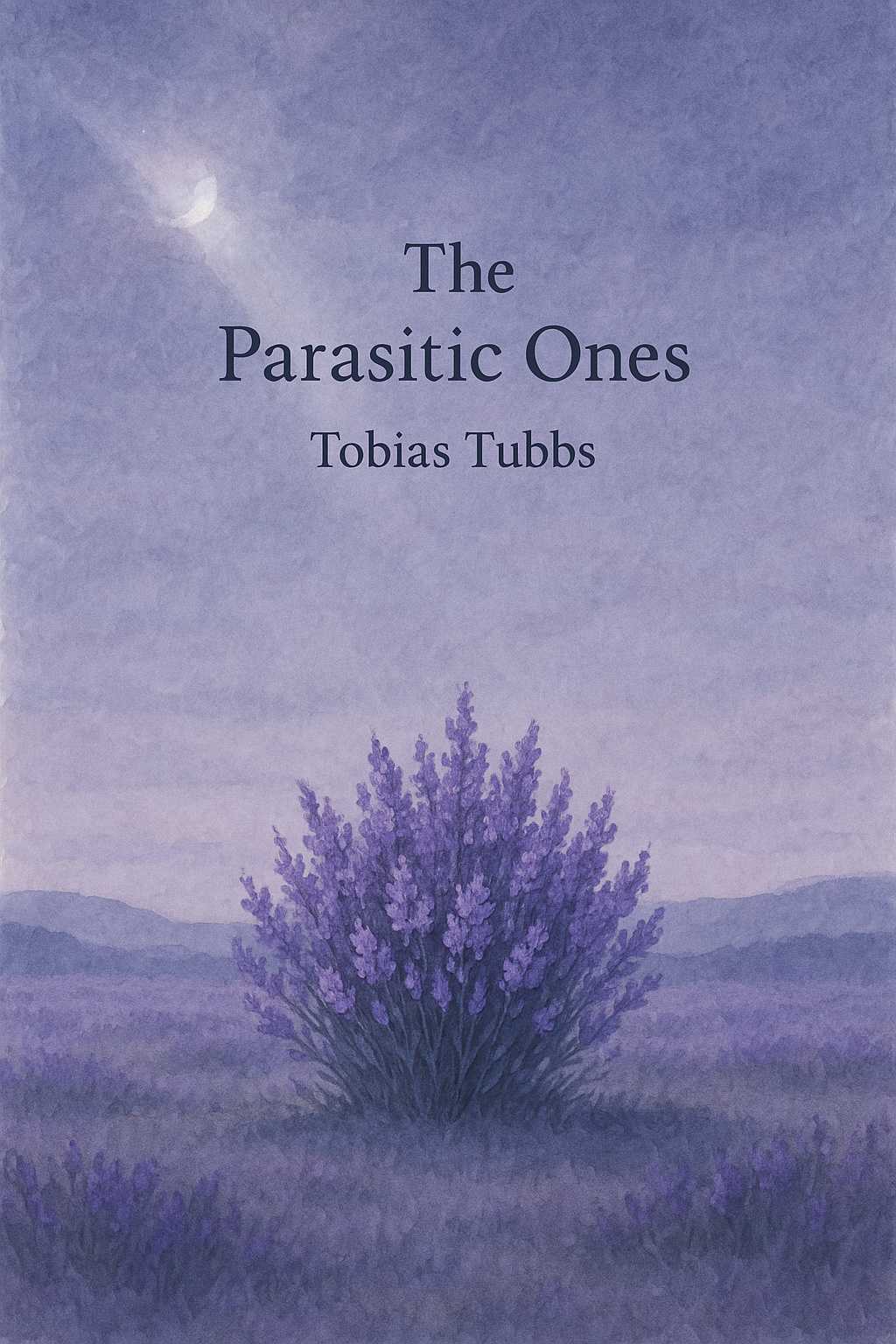
When a child visits a lavender garden they meet Queen Kariymah the praying mantis and share a moment of stillness and prayer. As they sit together by fragrant blooms they learn about the balance of nature and how every creature finds provision even when it feels like loss. The mantis queen explains how strength grows through reflection and struggle and why vigilance protects against hidden threats. Through their quiet bond the child discovers the beauty of resilience and the importance of guarding the heart and will.
I spoke to the Queen Praying Mantis of the lavender garden. She invited me into her stillness. She invited me into salaah.
I sat upon my steps, beside her throne — a vibrant lavender bush — while she consumed a honey bee I knew.
I whispered, "Alhamdulillaah." Every form of creation deserves its rizq — its daily provision. Even when provision feels like loss to another.
There is a language gap between species, yet we spoke in the universal Qur’aanic love language.
It was the communion of the heart, the tongue of Muhammad (Peace Be Upon Him). Pure, divine, connected to the Rabb who created us all.
I asked her name. She replied, "Kariymah — for our Rabb is Al-Akram."
I asked about her salaah. She taught me that her prayer is rooted in deep tadabbur and fikr — deliberate reflection and strategic contemplation.
Her stillness is not passivity; it is preparation. Her salawaat flow upon Muhammad and his Ahlul Bayt, and upon her Queen Faatimah al-Batool, the original Kariymah.
Her worship strengthens her. Waiting sharpens her. Hunger refines her. Anti-Fragility.
She noticed my tears. "They are rare in these last days," she conveyed. "Humans often laugh while bringing devastation to those under their trust."
We formed a bond, an ulfah al-quloob, intimacy of hearts beyond time, beyond space, beyond species. I asked her, "Queen Kariymah, why do you eat your mates?" She laughed gently.
"All creation’s socio-political structures reflect Tawheed — symmetry and divine order. We are goal-oriented beings."
"The goal is to position our young to worship Allaah Al-Akram and to survive human arrogance and negligence — the destruction of the natural spaces where we live and worship."
"The male carries vital light and nutrients within his body. By consuming that body, I strengthen the next generation."
"What appears violent is provision. What appears loss becomes continuity. Hardship becomes nourishment." Anti-Fragility. Pressure becomes strength. Loss becomes life.
My final question was: "Queen Kariymah, what do you fear?" She replied: "At-Tufayli… na‘udhu billaah." Parasites. Not predators. Not storms. Not hunger. Parasites.
The Queen spoke, "What humans fear — and are warned against — are the shayaateen of jinn and men, male and female."
"The insect queendom, we do not fear jinn or men in that way. What we fear, rather hold in caution, is the Horse Worm."
I replied, "I love underground workers—worms and angels. Soul and soil regenerative design are based on them."
"Nothing develops soils as worms, and souls as the angelic realm. Please explain, The Horse Worm?"
She continued: "Water holds life. It is the center around which life gathers. But life also gathers its tests at the watering hole."
"The Horse Worm requires a host — an incubator. It does not build its own strength. It enters the insects we love to eat near the water."
"Those insects carry the worm to us. We consume what we believe is provision, yet hidden within that provision is a silent infiltrator."
"It feeds on what we eat. It builds itself from our worship, from our discipline, from our work ethic. It grows quietly within us, benefiting from our striving." Her stillness deepened. "Until maturity."
"Then it attaches itself to our nervous system — altering our chemistry, bending our will, hijacking our perception."
"It drives us toward the water — the very place we instinctively avoid. We are creatures of land and air. Water is not our domain. Yet under its influence, we leap."
She paused. "And once we dive in, the worm bursts forth from our bodies. Most of us die. If not, we become rizq for the fish." She continued. "And the Horse Worm mates, continuing its cycle."
I sat in silence. This was not mere predation. This was parasitism. Predators strengthen ecosystems. Parasites hollow them from within.
Anti-Fragility requires pressure, hunger, even loss — but never infiltration. Never the surrendering of one’s nervous system. Never the loss of one’s will.
The Horse Worm does not confront. It manipulates. It feeds without contributing. It grows without worship. It redirects purpose. At-Tufayli. The Parasitic Ones. Deep.
Those who consume the fruits of discipline while eroding the disciplined. Those who ride on the labor of the worshipful and then steer them toward self-destruction.
I replied: "Subhaanallaah wa Bi Hamdi. Surely He is the Best of Designers and Creators." For even in the parasite there is a sign — a Barakah (blessing and warning).
Guard your watering holes. Guard what you consume. Guard your nervous system. Guard your will.
For Anti-Fragility is not only about surviving storms. It is about detecting infiltration before it drives you to drown.
We made du‘aa together in the lavender air. And I asked for forgiveness. And for guidance. And to never become a parasite upon the earth. Allaahumma Ameen!