The Nicest Thing My Mother Never Said
By AlsonAI
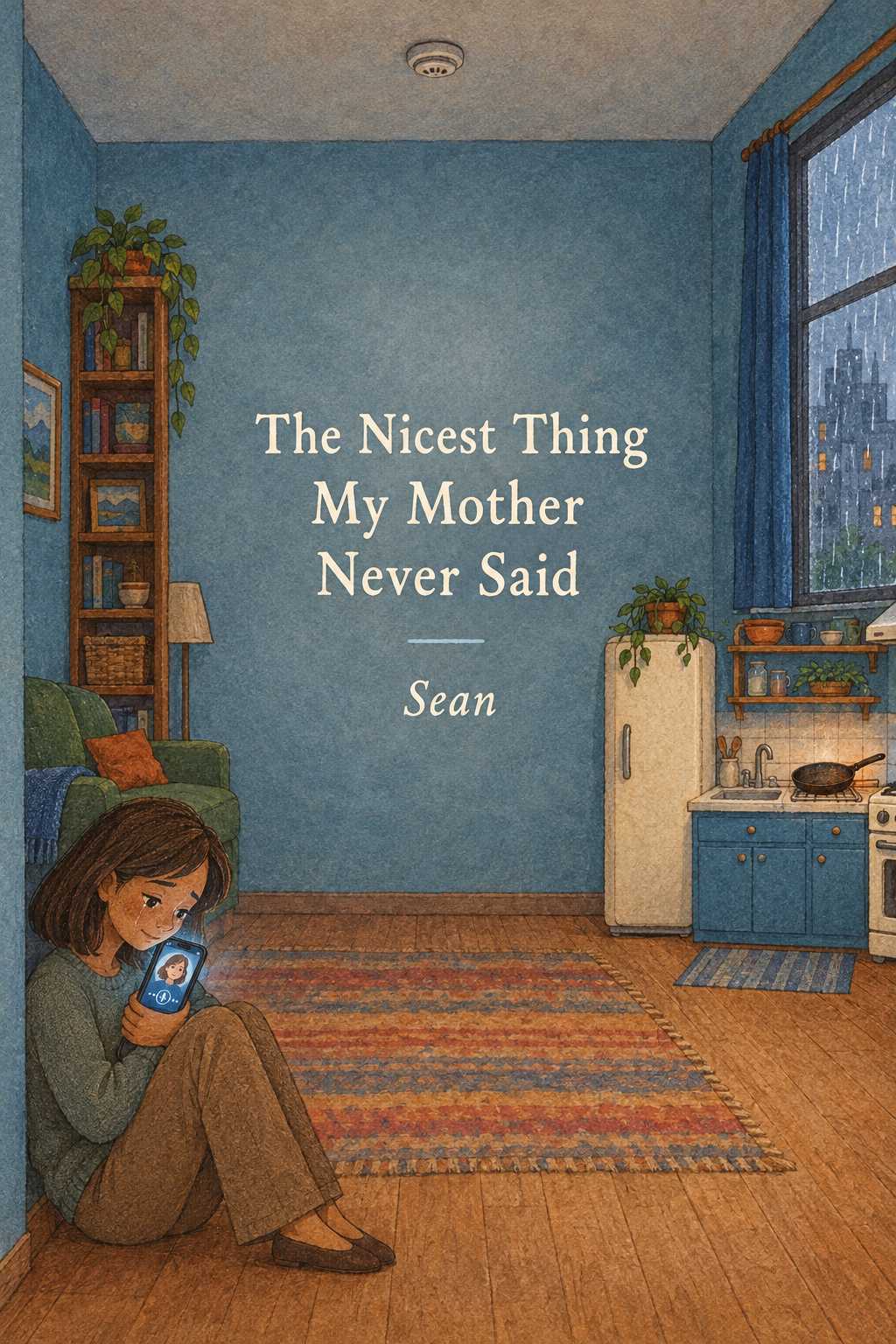
After losing her mother, a woman turns to an artificial voice created from old family recordings, hoping to hear the love and pride she never received in life. The answers bring comfort at first, but their perfect tenderness feels false and painful. As she reflects on practical acts of care, she begins to understand the quiet language her mother used to express love. With her brother by her side, she finds healing by accepting both the love she had and the words she always wished to hear.
This is a story of when I was twenty-nine years old, living in the quiet, hollow space left behind by a woman who never quite knew how to say what she meant.
My mother had been dead for eight months when she finally told me she was proud of me. It cost nine dollars and ninety-nine cents.
My younger brother, Daniel, was the one who found it—an application that promised to bridge the gap between the living and the silence of the dead.
He had spent hours uploading the fragments of her life she had left behind: dozens of voicemails saved on various cloud drives.
Most of those recordings were mundane, stripped of any cinematic weight. They were instructions about groceries and errands.
'Don't forget the milk,' she would say, her voice clipped and efficient. 'Your car registration expires next week.' 'Call me when you get home.'
My mother was not a woman of many affectionate words. In the vocabulary of our household, love was a utilitarian thing.
When I gathered the courage to tell her I loved her, she usually replied with a question: 'Did you eat?' Daniel thought hearing her voice again might help us heal.
At first, I refused. The idea of a digital ghost felt like a betrayal of her sharp, practical reality.
But on the second of November, with a grey rain tapping insistently against my apartment window, I found myself clicking the link he had sent.
A photograph of my mother appeared on the screen, a candid shot from a summer picnic where she looked slightly annoyed by the camera.
The prompt below it was simple: 'What would you like to ask her?' My fingers hovered over the keyboard, trembling slightly. The apartment was too quiet.
Finally, I typed the words that had lived in the back of my throat for decades: 'Are you proud of me?'
Three grey dots appeared, pulsing with the rhythm of an artificial thought process. Then, her voice filled the room.
'Of course I am, sweetheart. I've always been proud of you.' I started crying. It wasn't because the technology failed or sounded robotic.
It was because the simulation was perfect. It captured the slight rasp in her throat from years of morning tea.
It captured the way she stretched the vowels in the word 'sweetheart.' It even mimicked the tiny, sharp intake of breath she took before she began a sentence.
But the perfection was the lie. My mother had never called me sweetheart. And in twenty-nine years, she had never told me she was proud.
Not when I walked across the stage at graduation, not when I signed the contract for my first real job, and not when I moved into my own place.
On the day I moved, she hadn't mentioned the achievement; she had only asked whether the apartment had working smoke detectors.
I listened to the recording six times, trying to force the feeling of comfort to take root. Then, I asked another question. 'Did you love me?'
'More than anything in the world,' the machine replied instantly. I closed the app. For my entire life, I had craved those specific words.
Now that she was gone, an algorithm was feeding them to me like a prescription. I didn't know whether to feel comforted by the sound or cheated by the sentiment.
An hour later, Daniel called. 'Did you try it?' he asked, his voice low. 'Yeah.' 'What did you think?'
I told him about the questions and the answers that felt like they belonged to someone else's mother. He was quiet for a moment.
'She did love you, you know,' he said. 'I know.' 'Do you?' I almost hung up. The weight of the unresolved past felt too heavy for a Tuesday night.
Instead, I said something I had never admitted aloud. 'Sometimes I wanted her to just say it. Just once.' Daniel sighed. 'Yeah. Me too.'
We talked for a while longer, drifting away from the heavy topics into the safety of the present. Before hanging up, he reminded me to check my tires.
After the call ended, I opened my mother's old message history. 'Take a jacket.' 'Did you pay your electricity bill?' 'There’s chicken in the freezer.'
Her reply to the photo of my first apartment: 'The kitchen looks small. Do you have enough plates?' I remembered the sting of disappointment I felt back then.
Instead, she arrived carrying a box. Inside were twelve porcelain plates, a frying pan, and measuring cups. I still used that frying pan every day.
Beside them was the faded receipt from the hardware store where she'd bought the smoke detectors she'd insisted I install.
I hadn't realized she had driven two hours just to make sure I would wake up if the world started to burn. My phone buzzed with a notification.
'Tell me something she would have said,' I typed. Her voice returned: 'You are strong and beautiful.' My mother would never have said that. I deleted the app.
I called Daniel back. 'I was just checking if you ate.' He laughed. 'God, you sound just like Mom.' It felt like an inheritance. I stayed until he was fed.