The Black Beginnings of Islam | Alson.AI
the-black-beginnings-of-islam- AI Story Book by Alson.AI
By Alson.AI on Alson.AI
In this inspiring tale children will meet Hajar, a brave mother who ran between two hills in search of water and found the miraculous Zamzam spring that gave birth to Makkah. They will hear how Bilal, once enslaved, became the first voice to call believers to prayer and how King Negus offered safe refuge to early Muslims. Through these stories young readers learn about courage, faith, and the Black heroes who shaped the beginnings of Islam. Full of hope and history, this book celebrates perseverance and the power of belief in every color.
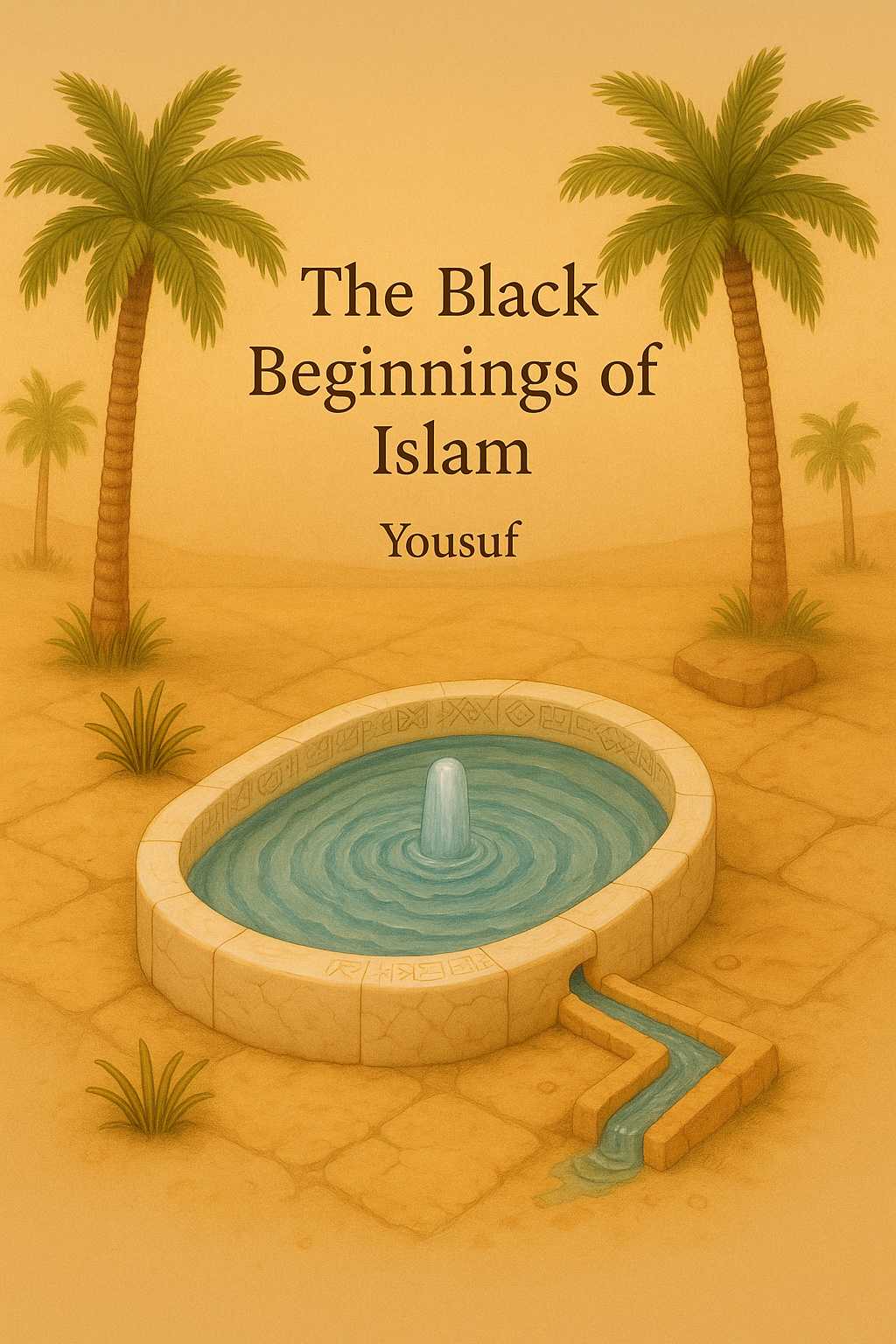
In a desert of gold and silence, where the sun blazed on endless sand, a mother ran. Her name was Hajar (peace be upon her), an African woman, strong, faithful, and alone. Beside her, her baby, Isma’il (peace be upon him), cried, thirsty under the sky. There was no water, no tree, no home—only hope. Hajar (peace be upon her) ran between the two hills, Safa and Marwah, again and again. Her desperation for Allah's help was in every step. And then, by Allah’s mercy, a miracle came: she heard a voice, an angel digging the earth until water flowed, and she rushed to contain the flowing water. That spring became Zamzam, and around it, the city of Makkah was born. The holiest city on earth began with the courage of an African woman, and her trust in Allah. From that one act of faith came generations of prophets. From her courage came the holiest city, Makkah, and its people. And every year, when Muslims walk between Safa and Marwah, we walk in Hajar’s (peace be upon her) footsteps, remembering the mother who trusted Allah when she had nothing else. She was not a queen or a warrior. She was something greater, a believer whose story became part of every believer’s prayer. Many centuries later, another servant of Allah rose before dawn. His name was Bilal ibn Rabah (may Allah be pleased with him), a Black man from Abyssinia. He had once been enslaved and beaten for saying “Allah is One.” But his faith never broke. When freedom came, Prophet Muhammad (peace be upon him) chose Bilal to call the Adhan, making him the first voice to invite people to prayer. “Allahu Akbar… Allahu Akbar…” Bilal’s voice filled Makkah’s air, echoing across the same desert where Hajar once ran. The first call to prayer came from a Black man’s lips. And when the early Muslims were forced to flee Makkah, they crossed the sea and came to the land of Abyssinia (today’s Ethiopia). There, they met a king named Negus, or Ashama ibn Abjar. He was wise and just, and when he heard their story, his heart softened. “You are safe here,” he said. He was Islam’s first ally, a Black king, whose kindness was a chapter of faith itself. Centuries passed. Ships began to cross oceans, carrying people against their will. Many who were taken from Africa were Muslim scholars, mothers, fathers, and dreamers who whispered Allah’s name when their voices were not allowed to be heard. They remembered Bilal’s call, Hajar’s (peace be upon her) courage, and the mercy of King Negus. Even in chains, their hearts bowed only to Allah. Faith traveled in secret, from deserts to oceans, from songs to prayers whispered in the dark. Today, their descendants walk in cities far from Makkah, but the same rhythm still beats in their hearts. They pray, they lead, they teach, they build. The faith their ancestors carried still carries them. When we say Islam is the religion of the Black man, we mean it is the story of his mother, his voice, his refuge, and his strength. It is a faith that began in the footsteps of a Black woman, was lifted by the voice of a Black man, and protected by the heart of a Black king. So when you hear the Adhan, remember Bilal. When you walk between Safa and Marwah, remember Hajar. When you feel doubt but choose justice, remember King Negus. And when you say “La ilaha illallah,” know that your words carry echoes of prophets and people who lived for truth. Islam has always belonged to every color, and the color black was there at the beginning. It was written into the story of faith, and written into the heart of every Muslim.
Hajar and Zamzam Bilal the muezzin King Negus black heritage Islamic faith courage and perseverance Makkah origin story