Beyond The Map : A Silk Road Expedition
By AlsonAI
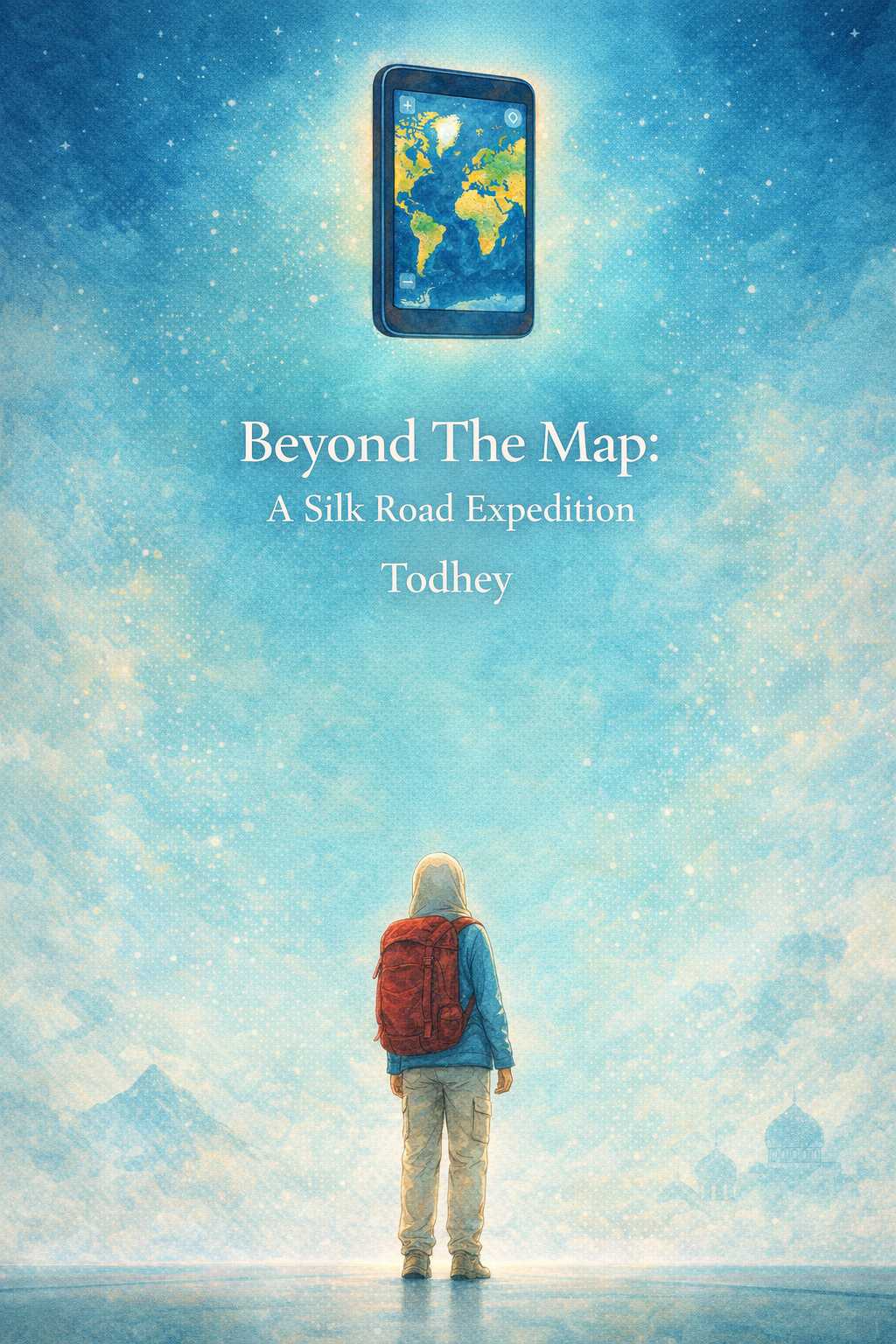
Dheya is a restless medical student who breaks free from examination stress to embark on a daring journey along the ancient Silk Road. From the fiery canyons of Kazakhstan to the turquoise lakes and nomadic yurts of Kyrgyzstan, she discovers the raw beauty of Central Asia. Each challenge, from bone-rattling trail rides to silent starry nights, teaches her resilience and the power of solitude. In Uzbekistan she marvels at glittering mosaics and vibrant bazaars that awaken her senses. By the time she reaches the legendary Seven Lakes of Tajikistan, she emerges transformed with a deeper sense of peace and purpose.
This is the story of a time when the sterile, fluorescent halls of my European medical school felt too narrow to contain my restless spirit. I am Dheya.
By day, I was a twenty-four-year-old medical student in my clinical phase, navigating a world measured in heart monitors, rigid schedules, and clinical diagnoses.
Yet, beneath the calm exterior of a dedicated student, I harbored the soul of a wanderer. I longed for places where the Wi-Fi was nonexistent, but the connection to the earth was profoundly visceral.
The ancient Silk Road called to me—a region of Central Asia shrouded in mystery, where towering snow-capped mountains bled into endless steppes. For weeks, doubts anchored me.
Could I manage this on a meager student budget? Was it foolish to venture off the grid as a solo female traveler?
The weight of medical school exams and the terrifying vastness of the unknown almost kept me tethered to my predictable life.
But one evening, staring at a digital map of a world I had only read about, an inner clarity pierced through my hesitation. The journey was not just a desire; it was a necessity.
I packed my life into a striking, deep red carrier backpack—a vibrant pulse of color against my otherwise muted attire.
Clad in loose cream cargo pants, sturdy hiking shoes, a light blue jacket, and a meticulously draped cream hijab covering my hair, ears, and neck, I stepped away from the familiar into the wild.
My threshold into this new world was Almaty, Kazakhstan, the golden gateway to the "Stan" countries.
The city was a beautifully jarring collision of eras, where imposing, blocky Soviet architecture stood defiant against a breathtaking backdrop of snow-crowned peaks.
But the true magic awaited beyond the concrete. Leaving urban comforts behind, I surrendered to a rugged road trip. My first great trial was the Charyn Canyon.
Standing at the precipice, I felt as though I had stepped onto a Martian dreamscape. Massive, wind-sculpted sandstone towers glowed in violent, fiery shades of red, deep orange, and golden ochre.
It was a labyrinth carved by the slow, deliberate hand of time. Deeper into the mountains, the arid rock surrendered to a lush, green paradise.
I reached Lake Kaindy, a body of water born from a violent earthquake, now resting in an impossible shade of turquoise.
Eerily rising from its freezing depths were the pale, ghostly trunks of submerged spruce trees, standing like silent, skeletal guardians.
To see them clearly, I rode a horse up steep, muddy, ascending trails. With every breath of the crisp, pine-scented air, the exhaust of my city life was purged from my lungs.
Sitting by the pristine, dark waters of the nearby Kolsai Lake, enveloped in absolute, echoing silence, I knew I had crossed a threshold from which I could never truly return.
But the journey demanded more. Crossing into Kyrgyzstan, I entered the undisputed land of mountains and nomads. Here, nature did not whisper; it roared.
My pursuit of untouched beauty dragged me across grueling, bone-rattling offroad trails that tested my physical endurance and my solitary resolve.
At Kel-Suu Lake, tucked dangerously close to the Chinese border, I stood beneath towering, jagged stone cliffs guarding a turquoise glacial basin.
I felt I was standing at the very edge of the earth, wonderfully small and insignificant. The approach to my inmost cave came at Song-Kul Lake.
At over three thousand meters above sea level, I traded the last remnants of modern comfort for a traditional white yurt.
Days were spent riding horses across vast, rolling alpine meadows, the cool, untamed wind whipping against my light blue jacket.
When night fell, stripping away the horizon, the sky ignited into a dazzling, unpolluted canopy of a billion stars.
Wrapped tightly in the cold, disconnected entirely from the digital world and the pressures of my medical future, I confronted the silence.
In that terrifying, beautiful emptiness, I found an overwhelming sense of peace. The anxiety of my ordinary world melted into the ancient soil.
Emerging from the mountains, I descended into the heart of the Silk Road: Uzbekistan. Entering Samarkand was like stepping through a magical portal.
Standing in the center of Registan Square, I was dwarfed by monumental madrasahs adorned with millions of intricate, glittering blue and turquoise mosaics.
I wandered through the vividly colored corridors of the Shah-i-Zinda mausoleums, a beautiful labyrinth of human history.
In Bukhara, an open-air museum of majestic sand-colored fortresses and sky-piercing minarets, the air was thick with sensory triumphs.
The scent of freshly baked bread, exotic spices from bustling bazaars, and traditional plov simmering in massive cauldrons awakened a deep reverence within me.
It was a rich, beautifully frozen tapestry of humanity. My final, ultimate test awaited in Tajikistan.
The journey to Haft Kul—the legendary Seven Lakes—was a treacherous, exhilarating drive up steep, rocky mountain paths.
With every sharp elevation, the mountain revealed a new lake, each boasting an impossible color, from deep emerald to profound purple. I realized the true elixir I had earned.